
Vent and blowdown silencers are designed to reduce the extreme noise levels produced during the rapid venting of high-pressure steam, gas, or air to atmosphere. This noise typically results from events such as: Steam safety relief valve discharge
Blowdown of natural gas pipelines during maintenance
Boiler startup steam dumps
Depressurization of process lines or vessels
Steam ejector exhaust or pressure safety valve (PSV) release Such events create instantaneous pressure changes and violent turbulence, resulting in sound pressure levels that often exceed occupational and environmental noise limits.
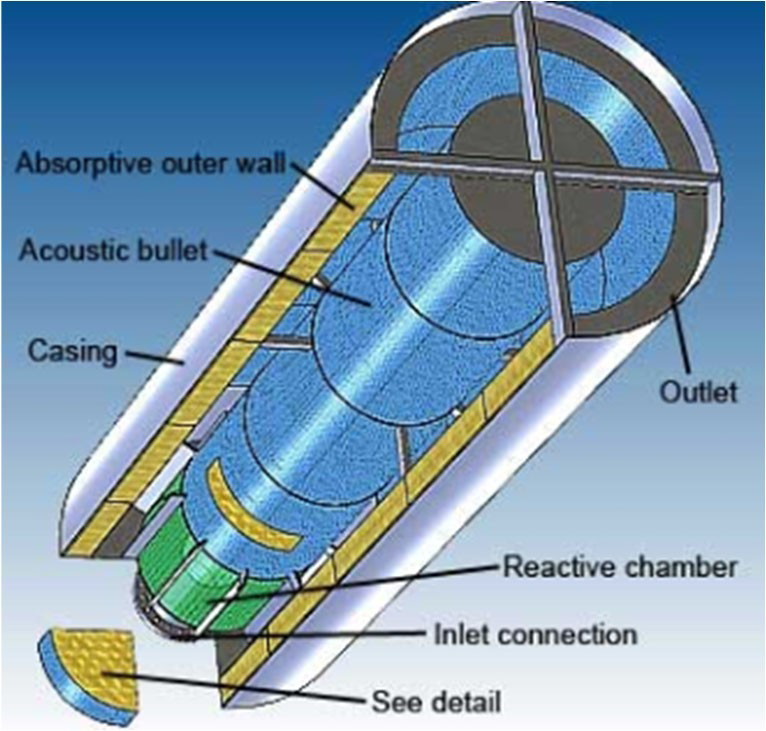
To address this, vent and blowdown silencers use a reactive-absorptive acoustic design. The reactive section reduces velocity and shock through diffuser technology, while the absorptive section dissipates broadband and high-frequency energy through acoustic media—providing balanced attenuation across all octave bands.
Controls both low-frequency shock noise and high-frequency turbulent mixing.
Suitable for steam, natural gas, air, nitrogen, and other process gases.
Designed based on flow rate, pressure, temperature, gas type, and required insertion loss.
Heavy-duty carbon steel or stainless steel with thermal insulation and weather protection options.
Tailpipes or discharge stacks with rain hoods
Condensate drains for steam applications
Vertical or horizontal orientation
ANSI flanged or custom inlets/outlets
Steam venting during boiler startup or depressurization
Natural gas blowdowns for pipeline or compressor station maintenance
Steam ejector discharge systems
Relief valve or rupture disk discharge vents
PSV and PRV (pressure safety/relief valve) silencing in refineries, power plants, and
chemical facilities
Any facility needing to control high-intensity, short-duration vent noise
The noise from high-pressure venting is primarily caused by two acoustic phenomena: Shock Noise – the instantaneous loss of pressure across a choked flow device
Turbulent Mixing – the ripping of the air as the vent gas decelerates to zero velocity during discharge to atmosphere
Vent and blowdown silencers are custom-designed to mitigate both, using diffuser elements to manage flow expansion and acoustic chambers to absorb radiated energy.
Silencer selection is based on:
Noise attenuation requirements
Gas type and flow characteristics
Blowdown duration or continuous flow
Cost-effective sizing and layout
Durability under thermal and environmental stress
These silencers play a critical role in meeting OSHA and environmental noise standards while protecting equipment, personnel, and surrounding communities from the harmful effects of unmitigated discharge noise.
Vent and blowdown silencers are designed to reduce the extreme noise levels produced during the rapid venting of high-pressure steam, gas, or air to atmosphere. This noise typically results from events such as: Steam safety relief valve discharge
Blowdown of natural gas pipelines during maintenance
Boiler startup steam dumps
Depressurization of process lines or vessels
Steam ejector exhaust or pressure safety valve (PSV) release Such events create instantaneous pressure changes and violent turbulence, resulting in sound pressure levels that often exceed occupational and environmental noise limits.
To address this, vent and blowdown silencers use a reactive-absorptive acoustic design. The reactive section reduces velocity and shock through diffuser technology, while the absorptive section dissipates broadband and high-frequency energy through acoustic media—providing balanced attenuation across all octave bands.
Controls both low-frequency shock noise and high-frequency turbulent mixing.
Suitable for steam, natural gas, air, nitrogen, and other process gases.
Designed based on flow rate, pressure, temperature, gas type, and required insertion loss.
Heavy-duty carbon steel or stainless steel with thermal insulation and weather protection options.
Tailpipes or discharge stacks with rain hoods
Condensate drains for steam applications
Vertical or horizontal orientation
ANSI flanged or custom inlets/outlets
Steam venting during boiler startup or depressurization
Natural gas blowdowns for pipeline or compressor station maintenance
Steam ejector discharge systems
Relief valve or rupture disk discharge vents
PSV and PRV (pressure safety/relief valve) silencing in refineries, power plants, and
chemical facilities
Any facility needing to control high-intensity, short-duration vent noise
The noise from high-pressure venting is primarily caused by two acoustic phenomena: Shock Noise – the instantaneous loss of pressure across a choked flow device
Turbulent Mixing – the ripping of the air as the vent gas decelerates to zero velocity during discharge to atmosphere
Vent and blowdown silencers are custom-designed to mitigate both, using diffuser elements to manage flow expansion and acoustic chambers to absorb radiated energy.
Silencer selection is based on:
Noise attenuation requirements
Gas type and flow characteristics
Blowdown duration or continuous flow
Cost-effective sizing and layout
Durability under thermal and environmental stress
These silencers play a critical role in meeting OSHA and environmental noise standards while protecting equipment, personnel, and surrounding communities from the harmful effects of unmitigated discharge noise.

At Ochoa Industries, we provide custom design solutions for industrial and marine applications. Our specialties include ventilation, noise control, and explosion-proof air conditioning, focusing on performance and safety.
Copyright © 2025 Ochoa Industries, All rights reserved.