
Noise barrier walls are engineered acoustic structures designed to reduce the transmission of unwanted sound from outdoor mechanical equipment, industrial operations, and other high-noise sources. These systems are commonly used where full equipment enclosures are impractical, but effective noise reduction is still required to protect personnel, neighboring properties, or sensitive occupied spaces.
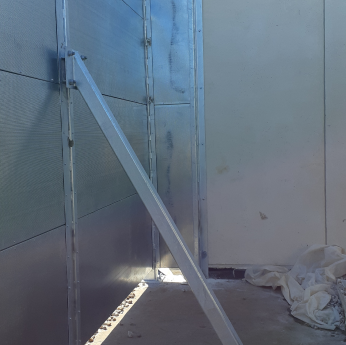
By interrupting the direct line-of-sight between the noise source and the receiver, barrier wall systems reduce sound propagation while maintaining equipment accessibility, ventilation, and operational functionality. These systems are ideal for rooftop equipment, generator yards, utility plants, mechanical screening, and other outdoor installations where source containment is not feasible.
Barrier walls are constructed using modular acoustic panel systems with structural framing engineered for environmental exposure, including wind loads, corrosion resistance, and long-term durability. Architectural finishes and custom configurations are available where aesthetics are also a project consideration.
Noise barrier walls are engineered using a combination of sound transmission loss, acoustic absorption, and strategic placement geometry to reduce sound propagation from outdoor equipment and industrial noise sources.
Barrier effectiveness depends heavily on wall height, length, proximity to the noise source, receiver location, and interruption of the direct sound path. Acoustic panel construction helps minimize transmitted noise while absorptive surfaces reduce reflected sound energy that could otherwise degrade performance.
Key design considerations include:
By strategically blocking and absorbing unwanted sound, noise barrier walls provide an effective and practical solution for outdoor noise mitigation while maintaining operational flexibility and site functionality.


At Ochoa Industries, we provide custom design solutions for industrial and marine applications. Our specialties include ventilation, noise control, and explosion-proof air conditioning, focusing on performance and safety.
Copyright © 2025 Ochoa Industries, All rights reserved.